
Vinyl Liner Pools in Pensacola
Vinyl liner pools in Pensacola offer an inground swimming option with a smooth, replaceable interior surface. The pool's supporting structure and its fitted liner are separate components, which gives owners a different maintenance and renovation path from a fiberglass or gunite interior. Along the Gulf Coast, the design must also make sense for drainage, groundwater and the way your family plans to use the deck.

How does an inground vinyl liner pool work?
A vinyl liner pool uses a structural wall system and a prepared floor beneath a flexible waterproof liner. The liner is fitted to the pool's dimensions and secured at its perimeter, with careful detailing around steps, inlets, skimmers and lights. The liner creates the visible swimming surface but is not the structure holding the surrounding soil.
This distinction matters because liner care is different from maintaining a plaster surface. A liner can eventually be replaced without reconstructing the entire pool, though replacements require correct measurements and attention to the underlying structure. Ask which components are included in the installation and what work would be involved if the liner needed replacement in the future. A smooth surface and a replaceable finish can be attractive, but neither removes the need for consistent water care.
For an overview of available work, explore Gulf Coast pool services.
Is a vinyl liner pool a good fit?
A good fit: You want a comfortable interior, a relatively defined pool configuration and the ability to replace the membrane later. You also understand that liner care includes avoiding sharp objects and handling water levels according to the manufacturer's instructions.
Compare alternatives if: Your vision depends on extremely unusual contours, a specialty integrated spa or a finish that is not a flexible membrane. Gunite construction offers more sculptural flexibility, while Latham fiberglass pools use a one-piece manufactured shell and surface. The right comparison includes future maintenance, not just the first-day appearance.
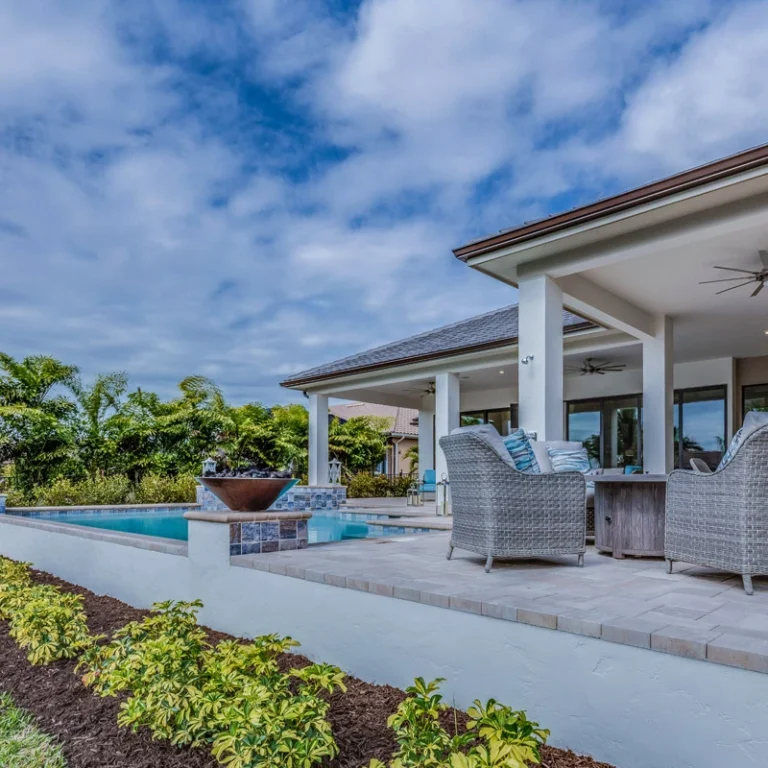
Liner patterns, steps and coping configurations
Pool geometry affects how the liner fits and how people enter and leave the water. Discuss corner steps, gradual depth changes, benches and safe entry points before reviewing liner patterns. A darker liner changes the perceived water color and may make certain debris less obvious, while a lighter surface produces a different appearance in strong Gulf Coast sun. Request physical samples when possible rather than judging every option from a screen.
The coping and liner attachment detail deserve explicit discussion. Deck movement, drainage and the surrounding hardscape can influence the condition of the edge over time. Ask how the selected pool system handles those connections. Lighting placement, skimmer access and a circulation system suited to the layout should be resolved before the project is priced in full.
Vinyl pools and Northwest Florida groundwater
Northwest Florida's sandy ground and potential groundwater can affect excavation and the strategy used to manage water around an inground pool. That is particularly important for a vinyl liner system because an unexpected change in groundwater conditions can affect the liner and surrounding structure. Do not attempt to lower or empty pool water without appropriate guidance.
A finished backyard should guide heavy rain away from the pool edge, equipment and home. Near the coast, consider corrosion exposure when choosing hardware and locating electrical components. Owners of vacation properties should also think through who checks the water and equipment while the property is unoccupied.

Permits for vinyl liner pool installation
New vinyl liner installations are subject to the permitting and barrier review required by the relevant city or county authority. The site plan may need to show the pool footprint, setbacks, deck, fencing and equipment position. Verify requirements for the property's address instead of relying on a neighbor's approval paperwork.
HOAs may have separate restrictions on pool placement or visible finishes. For Baldwin County, Alabama, consult that jurisdiction rather than applying Florida rules. Plan enough time for the required reviews before excavation or ordering materials specific to the selected configuration.
Our vinyl liner pool process on the Gulf Coast
Choose a practical configuration
Match the pool dimensions and depths to the available yard, preferred entry style and deck layout.
Select liner and edge details
Review liner appearance, coping transitions, steps and the maintenance implications of each choice.
Confirm site and approvals
Assess drainage and access, prepare a site plan, and coordinate applicable building and HOA reviews.
Install the pool structure
Excavate and prepare the support system, walls, floor and plumbing according to the approved plan.
Fit the liner and finish the deck
Measure and secure the liner carefully around fittings, then complete surrounding surfaces and connections.
Fill, test and orient the owner
Bring the pool into service and explain water chemistry, cleaning tools and the conditions that warrant a professional liner inspection.
Browse the regional pool design gallery for entry and deck ideas. Visit the Gulf Coast pool construction hub for local service context.
Vinyl liner pool ideas
Vinyl liner pools built by Payne Pool Professionals. See more in the vinyl liner pool gallery.

Materials, decking and design decisions
Explore pool decking and coping materials with an eye toward edge details and ease of cleaning. Tile inspiration and exterior material selections can help coordinate the broader outdoor area, though tile choices must be appropriate for the specific pool system. Ask which finish combinations are genuinely compatible rather than assuming every material in a design gallery belongs on a vinyl liner structure.
What Gulf Coast homeowners say
Consider whether reviewers describe clear explanations of the pool structure, liner choices and handover instructions.


Browse Gulf Coast pool builder reviews for customer accounts about vinyl liner pool projects.
Visualize your design and explore financing
Click to view a sample 3D pool rendering.
Sketch a layout with the free pool designer so steps and surrounding deck space are visible. The pool financing information explains available providers, subject to approval.
Request a Gulf Coast Consultation
Share a few details about your property and project, and the Payne Pool Professionals Gulf Coast team will follow up about next steps.

Areas served in Pensacola and along the Gulf Coast
A vinyl liner pool builder on the Gulf Coast should be able to discuss different site needs in Pensacola, Navarre, Fort Walton Beach and Destin. Homeowners considering vinyl pool installation in Pensacola or vinyl pool construction in Destin should ask how groundwater will be evaluated. The service also covers other Northwest Florida communities and Baldwin County, Alabama.
Vinyl Liner Pools in Pensacola: Frequently Asked Questions
A liner is a replaceable component, but its service life depends on water chemistry, sun exposure, installation quality and physical wear. There is no defensible universal replacement date for your project. Ask for the selected liner product information and care instructions, and have wrinkling, lifting or leaks evaluated before they create additional problems.
Yes, many vinyl pool configurations include steps, shallow entries and seating features. The available options depend on the supporting structure and the liner system being specified. Review how the liner is detailed around each feature, particularly at corners and transitions, rather than choosing a layout solely from a rendering.
Some punctures can be repaired, while more extensive damage may require professional inspection or replacement. Keep sharp objects away from the surface and avoid repairs that are incompatible with the liner. A technician should assess the location and cause of the damage, including whether something behind the liner needs attention.
Suitability depends on the actual groundwater conditions and the proposed installation design. High groundwater requires careful planning because pressure outside the pool can affect the liner system, especially if water is removed improperly. Discuss the site's drainage and water management plan before construction. Never empty a vinyl liner pool without professional direction.
The equipment may be an option if compatible with the specified pool components and liner manufacturer's guidance. Saltwater systems still require monitoring and balanced water. Coastal air also affects exposed metal independently of the pool's sanitation method. Ask the installer to explain the maintenance routine and suitability of fittings and equipment.
The pool size, structure, liner specification, deck, excavation, access, equipment and drainage needs all affect cost. Add-on features and unusual conditions can change the scope substantially. Request a written proposal that identifies the structural system, liner selection, included site work and what happens if unexpected ground conditions are discovered.
A new inground pool generally requires review through the appropriate local building authority, with details varying by address. Barrier and electrical requirements also need to be addressed. If the lot belongs to an HOA, its approval process is separate. Start with the property survey and contact the relevant city or county department.
Use products and tools approved for the specific liner and maintain balanced water chemistry. Abrasive brushes or unsuitable chemicals can damage a surface that otherwise feels resilient to the touch. Ask for written guidance at startup, including how to remove stains and what changes in liner appearance should prompt professional advice.
Talk With Us About Vinyl Liner Pools in Pensacola
Bring your survey, site photographs and questions to a discussion grounded in your property. Call 850.972.8472 or request your Gulf Coast project consultation.
Payne Pool Professionals LLC | Florida License CPC1459092 | Alabama License #54924