
Pool Remodeling in Pensacola
Pool remodeling in Pensacola is about solving the problems you notice every time you walk outside: worn plaster, outdated tile, damaged coping, cramped steps or equipment that no longer matches how you use the pool. Payne Pool Professionals helps Gulf Coast owners evaluate what can be renewed, what must be inspected and which improvements are worth incorporating into one coordinated renovation plan.

What does pool remodeling include?
Remodeling updates an existing pool and its surrounding features, rather than building a completely new shell by default. Pool resurfacing renews the interior finish. Replastering is a resurfacing method that applies a new plaster-based interior after suitable preparation. Coping is the material that caps the pool edge; it can be repaired or replaced separately from the waterline tile and deck.
A renovation may be cosmetic, functional or both. Changing the tile without addressing a leaking fitting can leave the most serious problem untouched. Conversely, a sound pool that simply looks dated may benefit from a more focused finish project rather than wholesale reconstruction. A proper assessment distinguishes surface wear, structural concerns, equipment problems and layout changes before work is priced.
For an overview of available work, explore Gulf Coast pool services.
Should you renovate your existing pool?
Renovation makes sense when: You like the pool's general position and footprint, but the finish, steps, lighting, coping or surrounding patio no longer serves you. It can also be an opportunity to upgrade aging circulation equipment alongside finish work.
Consider new construction when: The existing shell is fundamentally wrong for your property or your preferred pool shape. Compare custom gunite construction before assuming every footprint can be changed economically. For purely mechanical problems, an equipment installation review may be enough.

Resurfacing, replastering and layout improvements
Start by identifying the visible symptoms. Rough interior texture, persistent discoloration, cracked tiles and loose coping have different causes and remedies. Ask whether the finish condition is isolated or indicates an underlying issue. Photograph the areas you want inspected while the pool is operating normally; those details are easy to forget during a broad design conversation.
For a cosmetic refresh, coordinate tile, coping and deck colors rather than selecting them one at a time. For a more functional improvement, ask about step visibility, shallow seating, lighting, handrails or easier access to controls. A renovation should reduce friction in daily use. Adding features that complicate cleaning or circulation without improving how the pool functions is not automatically progress.
Renovation challenges in the coastal climate
Salt air and humid conditions can age exposed metal, deck hardware and certain materials more aggressively than owners expect. Heavy rain can also expose poor deck drainage or settling around the pool. On coastal properties, inspect the relationship between the pool edge, surrounding grade and places where water collects after storms.
Older pools may have equipment layouts that are hard to service or finish details that do not work well with the current patio. A renovation is a chance to address those issues in a deliberate sequence rather than repeat them with fresh materials. Storm preparation and access to the mechanical area should be considered before the new landscaping is installed.

When renovation work needs permits or HOA approval
Not every cosmetic repair triggers the same approvals, but changes involving structure, plumbing, electrical work, barriers or pool dimensions may require permits or inspections. Verify what applies to the actual scope with the local building authority. Work in Escambia County can be reviewed differently from work within a municipality, and nearby Florida counties have their own processes.
HOAs may evaluate visible deck or fence changes even when the original pool was previously approved. If you are renovating a property across the Alabama line, check the applicable Baldwin County process. An existing pool permit does not automatically authorize every future alteration.
Our pool remodeling process on the Gulf Coast
Inspect the present pool
Document surface wear, coping condition, visible cracking, deck drainage and equipment concerns.
Define what to keep
Separate structural essentials from cosmetic preferences and identify which features remain useful.
Specify the renovation
Select finish materials, tile, coping and related equipment work; confirm which permits or reviews apply.
Prepare and repair
Protect the property, remove affected materials and address identified substrate or component issues.
Install the new finishes
Complete resurfacing, tile, coping and agreed deck work in an order suited to the materials.
Refill and restart
Follow the selected finish startup instructions and review changed equipment or care requirements with the owner.
The Gulf Coast pool gallery helps illustrate finish and deck choices. See the regional swimming pool hub for the broader service area.
Pool remodeling ideas
Finished pools by Payne Pool Professionals that show the finishes, tile, coping and decking choices a remodel can update.

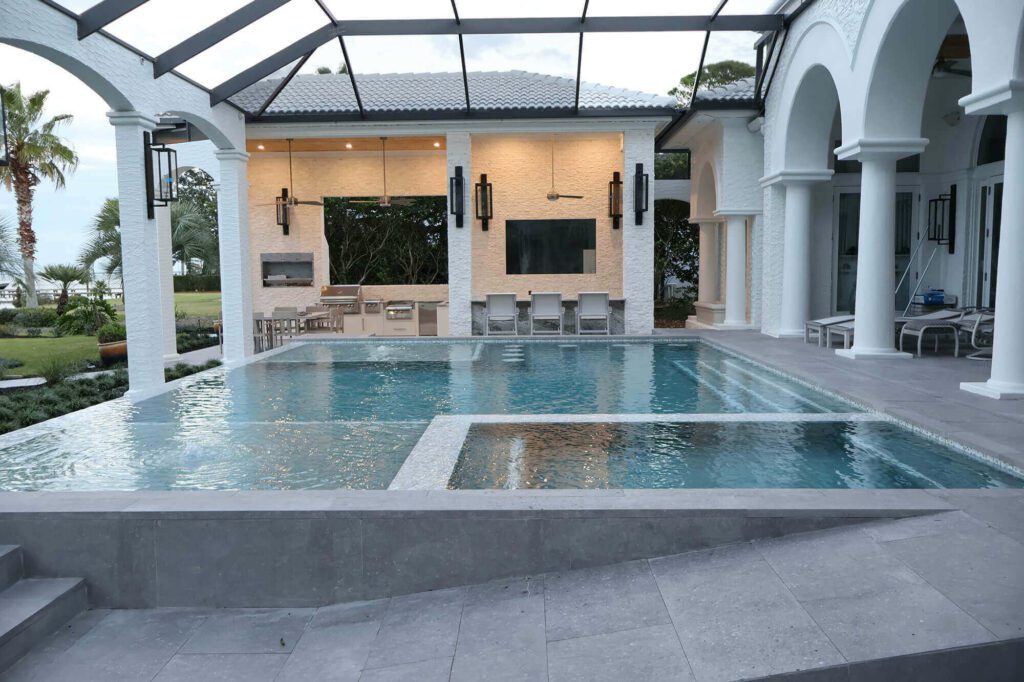


Materials, decking and design decisions
Study interior pool finishes carefully because texture, water color and care requirements differ. PebbleTec, PebbleSheen and PebbleQuartz can be considered where appropriate to the project. Pool tile and decking and coping choices should be selected as a coordinated group. On an existing pool, compatibility with the structure and substrate is more important than matching a reference photo exactly.
What Gulf Coast homeowners say
Renovation feedback may illuminate how the condition assessment and selected scope were discussed with owners.


Browse Gulf Coast pool builder reviews for customer accounts about pool remodeling projects.
Visualize your design and explore financing
Click to view a sample 3D pool rendering.
Before selecting new tile, use the 3D pool planning tool to explore how the surrounding deck might change. See available financing resources for provider information.
Request a Gulf Coast Consultation
Share a few details about your property and project, and the Payne Pool Professionals Gulf Coast team will follow up about next steps.

Areas served in Pensacola and along the Gulf Coast
Homeowners looking for pool resurfacing in Pensacola often have different priorities than owners planning a pool renovation in Destin, FL. Explore project context in Pensacola, Destin, Fort Walton Beach and Panama City Beach. Pool replastering in Pensacola, pool resurfacing in Panama City Beach and a complete pool remodel in Fort Walton Beach all begin with an inspection of the existing structure and finishes.
Pool Remodeling in Pensacola: Frequently Asked Questions
Rough texture, exposed aggregate, persistent stains or widespread finish deterioration may indicate that the interior should be assessed. Surface appearance alone does not establish whether structural repairs are also needed. Have the condition inspected before choosing a finish so the proposal addresses the underlying cause, not just the visible symptoms.
Replastering renews an interior plaster finish. Remodeling can include replastering, tile, coping, deck, lighting, equipment and selected layout changes. A pool with sound coping may only need surface work, while a dated outdoor area may justify a broader coordinated project. The scope should follow the condition and your intended use.
Yes. Most finish and equipment improvements can be considered while retaining the existing footprint, assuming the structure is suitable. Updated tile, coping, interior surfaces, lighting and circulation can substantially change how the pool feels. Modifying the shell or adding major new features is a separate design and engineering question.
Many interior resurfacing projects involve controlled water removal, but the approach depends on the work and site conditions. Coastal groundwater can create special risks when a pool is emptied. Never drain an existing pool casually or assume the same method used inland is appropriate. Have the contractor evaluate groundwater exposure first.
The cost depends on the pool dimensions, interior condition, preparation requirements, chosen finish and whether other components need attention. Repairing damaged substrate can change the scope from a straightforward finish renewal. Request a site-specific assessment and written breakdown rather than a number based only on the pool surface area.
Often, yes. Coordinating pump, heater, lighting or controls with renovation work may reduce disruption compared with separate projects. The equipment should be selected for the actual pool hydraulics and electrical setup, not simply added because it is new. Review the options with the equipment installation team.
Ask how the finish will feel underfoot, what water color it produces, how startup chemistry is handled and what cleaning methods are recommended. Review samples and actual completed work where available. Finish manufacturers have specific care requirements, and the initial startup can affect the appearance and performance of the surface.
Potentially, but the schedule depends on the actual work, permit needs, material selections and weather. Exterior construction can be affected by heavy rain. Discuss whether the project includes exposed surfaces or equipment that need protection during storms. A realistic schedule should leave room for finish curing and startup requirements.
Plan Your Pool Remodeling Project in Pensacola
Bring your survey, site photographs and questions to a discussion grounded in your property. Call 850.972.8472 or request your Gulf Coast project consultation.
Payne Pool Professionals LLC | Florida License CPC1459092 | Alabama License #54924