
The Details That Turn a Pool Into a Backyard.
A beautiful swimming pool is more than the water and the surface beneath it. Raised walls, spas, water features, stone, tile, veneers, and other exterior finishes help define the architecture surrounding the pool and connect it with the rest of the backyard. Payne Pool Professionals helps Florida homeowners coordinate pool exterior finishes and materials as part of new pool construction and remodeling projects, creating outdoor spaces where every surface feels like it belongs together.
Finish the Parts of the Pool Above the Water.
Interior pool finishes get plenty of attention, but some of the most visually important surfaces are outside the water. Exterior finishes can be used to define architectural elements, introduce texture, create contrast, and connect the swimming pool with the home and surrounding outdoor environment.
Depending on the pool design, exterior finishes may be incorporated into:
- Raised pool walls
- Raised spas
- Spa exteriors
- Water features
- Feature walls
- Columns and structures
- Planter walls
- Outdoor living features
- Other architectural elements
These materials should be considered as part of the complete pool design, not decorations added after everything else has already been selected.
Explore Materials That Give the Pool Character.
The right exterior finish depends on the architecture of the pool, home, landscape, and overall backyard design. Available materials and applications vary by project, but exterior finish selections can include natural stone, manufactured materials, tile, veneers, masonry finishes, and other decorative surfaces.
Natural Stone
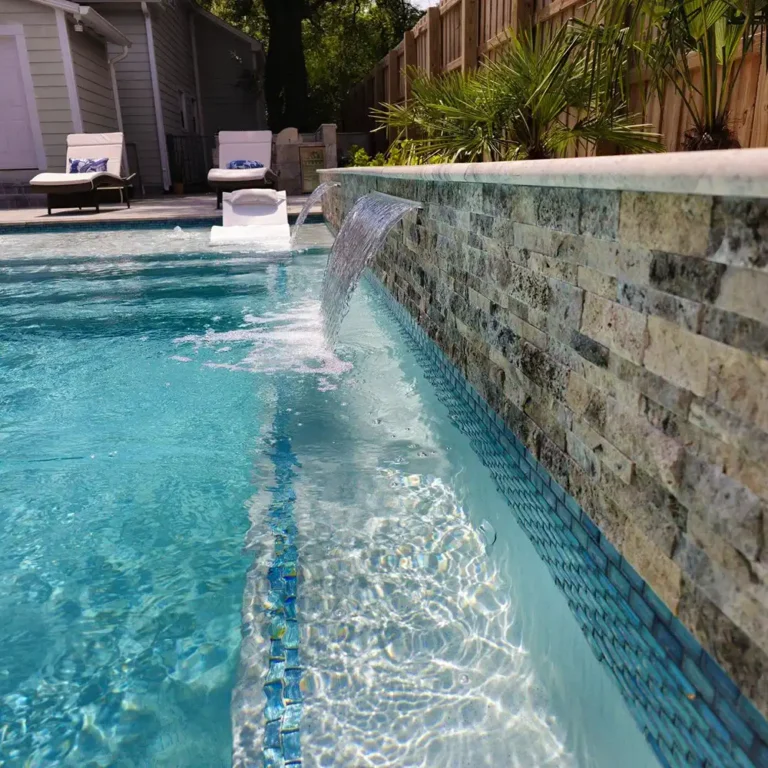
Natural stone can introduce texture, variation, and a strong connection to the surrounding landscape. It can work particularly well with resort-inspired pools, raised walls, water features, spas, and outdoor living environments. Because natural stone varies in color and pattern, each installation develops its own character.
Stone & Masonry Veneers
Veneer products can create the appearance and texture of masonry or stone on vertical pool features and surrounding structures. They're particularly useful for defining raised walls, spa exteriors, and feature walls. Different profiles and colors can support designs ranging from contemporary to traditional.
Decorative Tile
Tile isn't limited to the waterline. Decorative tile can be incorporated into raised walls, spas, spillways, water features, steps, benches, and other visible surfaces. Glass and other decorative tile can interact with water and sunlight to create a stronger visual focal point.
Explore Pool TileArchitectural Finishes
Not every surface needs to be covered in stone or tile. Other exterior finish systems can provide clean, understated surfaces that complement contemporary and transitional pool designs. The goal is to choose materials based on the architecture of the project.
Turn a Structural Element Into a Design Feature.
Changes in elevation can create some of the most interesting opportunities in custom pool design. A raised pool wall can help accommodate site conditions while also becoming an architectural feature. Exterior finishes can transform that wall with:
- Natural stone
- Veneers
- Decorative tile
- Contrasting materials
- Water features
- Integrated landscaping
- Architectural details
Instead of trying to hide elevation changes, thoughtful design can make them part of the character of the pool.
Make the Spa Part of the Architecture.
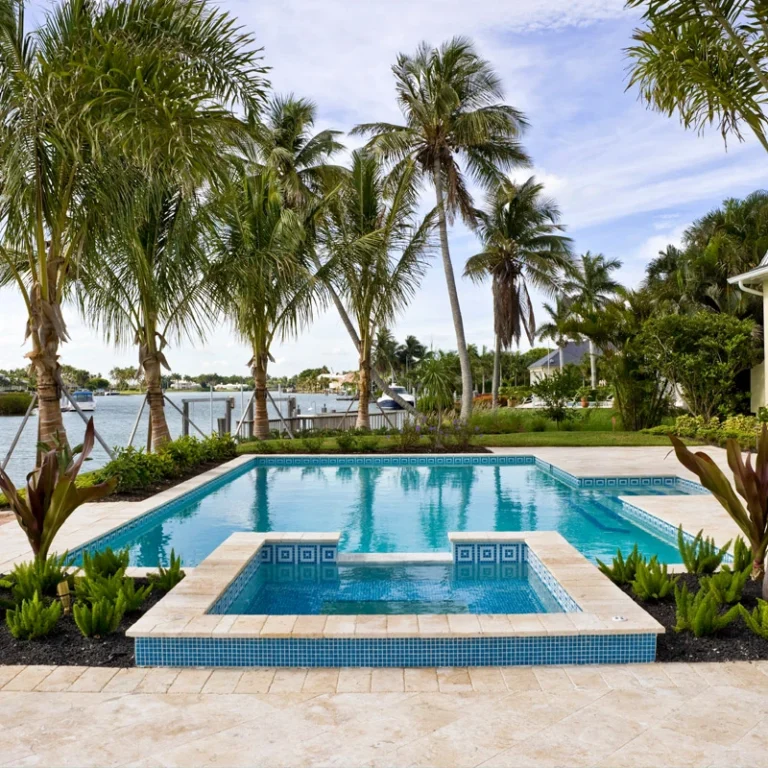
A raised spa naturally draws attention. Its exterior surface is visible from around the backyard, which makes the finish particularly important. Spa exteriors can coordinate directly with the pool coping and decking or introduce another complementary texture into the design.
Tile, stone, veneers, and other finishes can also be combined with spillways or water features to create a focal point between the spa and swimming pool.
Give Moving Water the Right Background.
Water features become considerably more dramatic when the surface behind them has been thoughtfully designed. Exterior finishes can be used around:
- Sheer descents
- Scuppers
- Spillways
- Raised walls
- Waterfalls
- Spa spillovers
- Other custom water features
Material texture, color, and orientation can influence how moving water looks as it travels across or in front of the surface. The feature and finish should be designed together.
One Backyard. One Material Palette.
A custom swimming pool can easily involve five or more major surface selections. That doesn't mean you need five competing design ideas. The strongest projects usually establish a material palette and repeat or complement those selections throughout the backyard. Consider how these elements work together:
Pool Tile
Creates the transition at the waterline and can highlight architectural features.
Explore Pool TileCoping
Frames the swimming pool and provides a transition to the surrounding deck.
Exterior Finishes
Add texture and character to walls, spas, water features, and architectural elements.
Together, these materials determine much of what you actually see when you look across the finished backyard.
The Pool Should Look Like It Belongs There.
One of the easiest ways to create a disconnected backyard is to ignore the architecture of the house. Exterior pool materials can help establish a visual relationship between the home and swimming pool.
A contemporary home may benefit from cleaner lines, restrained colors, and larger-format materials. A Mediterranean or traditional Florida home may work better with warmer stone, textured finishes, and more organic material combinations. A resort-inspired backyard might incorporate natural stone, water, landscaping, and repeated textures to create a more immersive environment.
The objective isn't to copy the house. It's to make the pool feel like it was designed for the property rather than delivered separately.
Build the Material Palette Into the Pool Design.
Exterior finishes are easiest to coordinate when they're considered during the original design process. For new pool construction, Payne can help homeowners consider the relationship between the pool structure, interior finish, tile, coping, decking, raised features, landscaping, and surrounding architecture. That creates opportunities to repeat materials intentionally and make features feel integrated rather than added later.
Custom Gunite Pools
Design raised walls, spas, and water features alongside the pool shape from the start.
Explore Gunite PoolsFiberglass Pools
Coordinate surrounding finishes with your selected Latham shell and gelcoat color.
Explore Fiberglass PoolsVinyl Liner Pools
Coordinate exterior materials with your selected liner pattern and color.
Explore Vinyl Liner PoolsAvailable materials and applications vary by pool type, location, and individual project.
Change the Materials. Change the Backyard.
A pool doesn't necessarily need a completely new structure to feel completely different. Exterior materials are often one of the most visible opportunities during a swimming pool renovation. Depending on the existing pool and project scope, remodeling can include:
- New exterior finishes
- Updated raised walls
- New waterline tile
- Pool replastering
- New coping
- Updated decking
- Spa improvements
- Water feature updates
- Lighting
- Pool equipment upgrades
Replacing dated finishes with a coordinated material palette can dramatically modernize an older swimming pool.
Explore Pool RemodelingMaterials Need to Handle the Backyard They're Going Into.
Exterior pool materials in Florida spend their lives dealing with sun, rain, humidity, water, landscaping, and year-round outdoor use. Material selection should therefore consider more than appearance. Depending on the application, factors can include:
- Exposure to sunlight
- Exposure to water
- Surface location
- Maintenance requirements
- Product suitability
- Surrounding landscaping
- Pool chemistry exposure
- Installation requirements
- Overall project environment
Payne helps homeowners evaluate finish options within the context of the actual pool project and backyard.
See How Exterior Materials Transform a Pool.
Exterior finishes make considerably more sense when you see them installed. Explore Payne Pool Professionals projects to see how raised walls, spa exteriors, water features, stone, and decorative materials come together in real Florida backyards.


Exterior Pool Finishes Across Florida.
Payne Pool Professionals incorporates exterior finish selections into eligible new pool construction and remodeling projects throughout its Florida service markets. Available materials and services vary by location and individual project.
Florida Gulf Coast
Explore new pool construction and remodeling through Payne's Gulf Coast team.
Florida Gulf CoastJacksonville
Explore pool construction and remodeling throughout Jacksonville and Northeast Florida.
JacksonvilleQuestions About Pool Exterior Finishes
Exterior pool finishes are materials applied to visible surfaces outside the swimming pool interior. They can include stone, tile, veneers, masonry finishes, and other decorative materials used on raised walls, spas, water features, and architectural elements.
Depending on the project, raised pool walls can incorporate natural stone, decorative tile, veneers, masonry finishes, and other materials suitable for the specific application.
Natural and manufactured stone products can be incorporated into many pool designs. The appropriate material depends on its intended location, installation requirements, exposure, and individual project conditions.
Tile products appropriate for the intended application can be used on raised walls, spas, water features, and other architectural pool elements.
They don't have to match exactly. Exterior pool materials should complement the architecture, colors, textures, and overall character of the home and backyard.
The spa can use the same materials as other pool elements or introduce a complementary finish. Raised spas often provide an opportunity to create a focal point within the overall pool design.
Yes. Depending on existing conditions and project scope, a pool remodel can update exterior surfaces along with interior finishes, tile, coping, decking, water features, and other elements.
Start with an overall design direction and evaluate the interior finish, tile, coping, decking, and exterior finishes together. Repeating complementary colors and textures can help create a more cohesive backyard.
Yes. Payne helps homeowners coordinate available exterior finishes and other pool materials as part of eligible new pool construction and remodeling projects.
Finish the Pool From Every Angle.
The details above the water matter just as much as the ones below it. Coordinate stone, tile, walls, spas, water features, decking, coping, and interior finishes with Payne Pool Professionals to create a backyard that feels intentionally designed from end to end.
Start Your Pool Design