
Fiberglass Pools in Pensacola, FL
A fiberglass pool in Pensacola, FL, offers a defined swimming shape, a smooth interior and a design process built around choosing the right shell for your property. Payne Pool Professionals installs Latham fiberglass pools throughout the Gulf Coast, where backyard access, groundwater and salt exposure all deserve attention before excavation begins. Start with the dimensions of your outdoor space and the way your household will use the water, rather than selecting a shell from a picture alone.
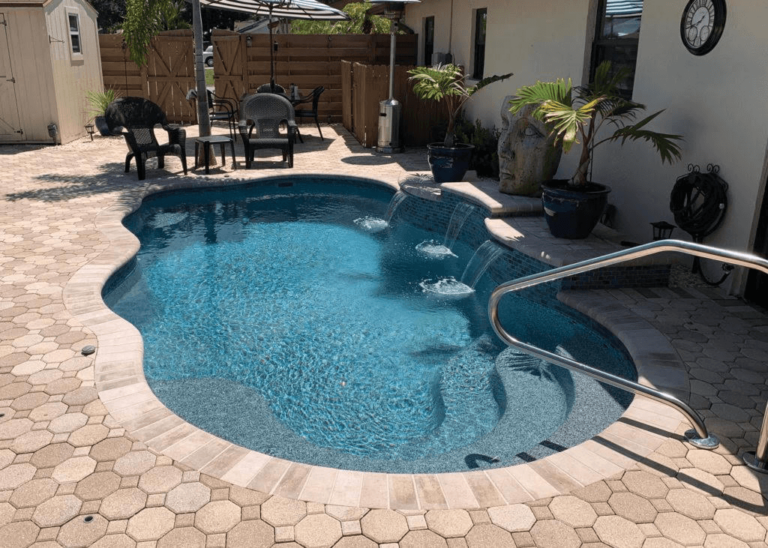
What a fiberglass pool installation involves
A fiberglass pool is a single manufactured shell installed in an excavated opening. The shell provides the pool's shape and interior surface. Plumbing, the circulation system, drainage considerations, coping and surrounding decking are planned around it. Unlike a gunite pool, which is formed and finished at the site, the finished shell must travel to your property and be placed into position. This makes delivery clearances, overhead obstructions and crane access part of the design conversation from the outset.
Latham fiberglass pools come in different configurations with features such as steps, benches and shallow lounging areas. Your selected model must fit the available yard and leave room for service access, permitted setbacks and a usable pool deck. A design that looks generous in a catalog can feel cramped if the remaining patio is too narrow for a table or a safe walking path.
For an overview of available work, explore Gulf Coast pool services.
Is a manufactured fiberglass shell right for your yard?
A good fit: You like the appearance of a smooth manufactured surface, a model's entry layout suits your family, and your property has a workable route for shell delivery. This is also worth considering when you prefer to choose from established shapes rather than design every curve from scratch.
Consider another approach: A tiny gate, heavy overhead restrictions or a highly unusual footprint may favor custom construction. If you want a perimeter-overflow edge, a fully integrated unusual spa or a shape defined around several site obstacles, compare custom gunite pools in Pensacola. If you're still comparing basic structural approaches, the vinyl liner pool options offer a different kind of replaceable interior.
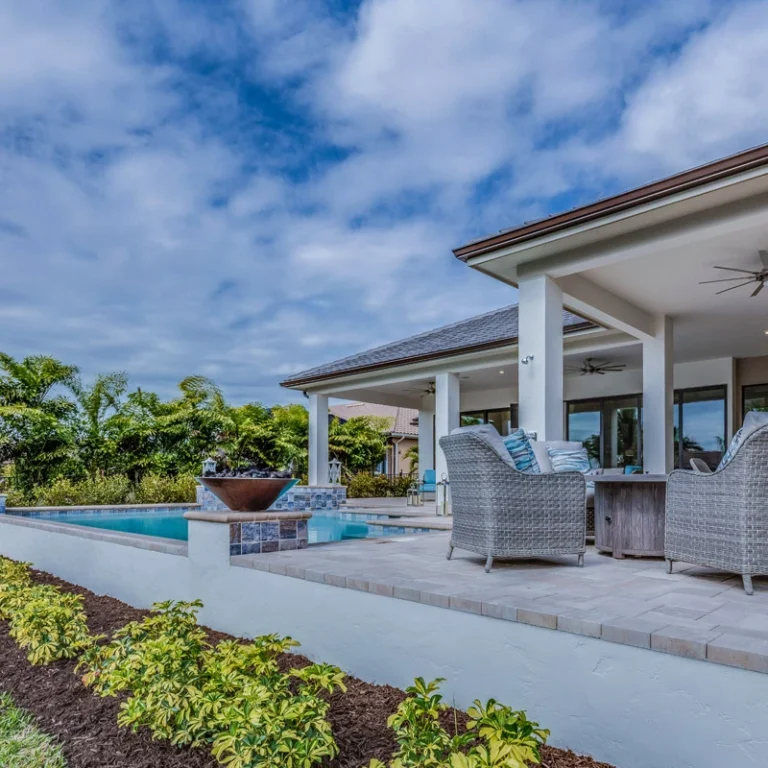
Latham shell designs and everyday-use details
Shell geometry comes first, but it is hardly the only decision. Consider which end should be shallow, where people will enter, whether benches occupy valuable swim space and how the steps relate to doors and outdoor seating. A lap-oriented household might prioritize a clean central swimming lane. A family using the pool for conversation and cooling off may care more about a generous shallow area and a place to sit.
Lighting should be positioned for both night use and visibility from the house. Equipment location matters because an attractive patio is less enjoyable when machinery dominates its quietest corner. Ask to see a 3D layout showing the pool, deck, fence lines and equipment access together. Planning these elements separately is how a perfectly sensible shell ends up poorly positioned in the finished yard.
Fiberglass pools in Pensacola and coastal site conditions
Pensacola and nearby coastal communities include inland neighborhoods, waterfront lots and barrier-island properties. Sandy excavation conditions are not identical across those settings. The team should evaluate whether groundwater, drainage or unstable areas may affect the excavation plan. A pool close to the water can also put metal components and exposed equipment at greater risk from salt air.
A fiberglass shell does not eliminate those site questions. It still requires suitable support, careful backfill and coordinated management of water during installation. Discuss the finished deck's drainage direction as well. Rain should have a planned path away from the pool and house rather than collecting at the coping or running onto the patio.

Fiberglass pool permits and HOA requirements
An application usually begins with a site plan that places the proposed pool relative to the property lines, structures and utilities. The responsible city or county building department determines applicable permits and inspections. Properties in Escambia, Santa Rosa, Okaloosa or Bay counties can involve different reviewing offices depending on the address.
If you are in an HOA, send the relevant architectural rules to the project team early. Some communities review fencing, deck materials, equipment screening and landscaping, not just the shell. A property in Baldwin County, Alabama, follows its own jurisdiction's process rather than Florida's. Confirm those requirements before treating the design as final.
Our fiberglass pool process on the Gulf Coast
Measure the actual backyard
Review the survey, access width, overhead utilities and where the shell could be delivered without relying on guesses from aerial photos.
Match the shell to use
Compare Latham models against the intended swimming activities, patio proportions, safe circulation and available depth.
Develop a site-ready design
Place decking, plumbing routes and the equipment pad in the plan; coordinate required local and community approvals.
Excavate and set the shell
Prepare the opening, position the manufactured pool and coordinate support, backfill and water according to the selected installation method.
Connect and finish
Install circulation components, complete coping and decking, and inspect the surrounding drainage transitions.
Start up and explain ownership
Review controls, water care, cleaning and the steps to take before and after severe coastal weather.
Review the Gulf Coast pool gallery for layout ideas and use the Northwest Florida pool builder overview to put this service in regional context.


Materials, decking and design decisions
The line between shell and terrace deserves as much thought as the pool color. Compare pool tile choices for accent details, decking and coping materials for barefoot comfort and exterior finishes for adjacent outdoor structures. Look at samples in daylight and consider whether they will be comfortable under direct afternoon sun. Avoid selecting slippery or hard-to-clean transitions simply because they photograph well.
What Gulf Coast homeowners say
Customer reviews can help you evaluate communication about shell selection and installation access. Read the published feedback yourself.


Browse Gulf Coast pool builder reviews for customer accounts about fiberglass pool projects.
Visualize your design and explore financing
Click to view a sample 3D pool rendering.
Try the free 3D pool design tool to test whether a manufactured shell leaves the patio space you need. Consider pool financing options when deciding which features belong in the final scope.
Request a Gulf Coast Consultation
Share a few details about your property and project, and the Payne Pool Professionals Gulf Coast team will follow up about next steps.

Areas served in Pensacola and along the Gulf Coast
Homeowners researching fiberglass pool installers in Pensacola can also explore work across Gulf Breeze, Navarre, Destin and Panama City Beach. Search interest in fiberglass pools in Destin, FL, and fiberglass pools in Panama City, FL, often comes from people comparing lots that face very different access constraints. The service covers Northwest Florida as well as Baldwin County, Alabama. Ask specifically about delivery to your address.
Fiberglass Pools in Pensacola, FL: Frequently Asked Questions
Possibly, but the key question is whether the selected shell can reach the yard. Measure gate openings, turning space and overhead clearances before choosing a model. Even when a pool fits within the property setbacks, the delivery truck and lifting equipment may need access that the finished pool does not.
Fiberglass uses established manufactured shell shapes; gunite is built to a site-specific design. A Latham model may provide the exact steps and lounging area you want, while gunite can accommodate unusual geometry. Compare usable swimming space, construction access and the complete backyard plan before deciding which approach serves the property.
Saltwater chlorination can be part of a fiberglass pool equipment design, but compatibility depends on the chosen shell, fittings and system instructions. Saltwater is not maintenance-free. Water balance, inspection and protecting exposed metal components remain important, particularly near the coast where airborne salt also contributes to corrosion.
Model selection, excavation, shell transport, crane access, decking, drainage and equipment all influence the proposal. A challenging delivery route can change the installation plan even when the pool itself is straightforward. Request an itemized scope that separates the pool package from site improvements and optional backyard features.
Not automatically. Groundwater conditions require a property-specific assessment and an installation approach suited to those conditions. Excavation and backfill planning become more important when water is encountered. Ask how the contractor evaluates the site and manages groundwater during construction and afterward; do not rely on a general promise that any lot will work.
The schedule depends on shell availability, local approval, access preparation, excavation, inspections and weather. Setting a shell is only one phase; coping, equipment, decking and startup also take work. The team should give you a project-specific sequence after reviewing the site rather than promising completion based solely on the shell-setting step.
Yes, heating can be evaluated during equipment design. A heat pump, which transfers heat from the surrounding air into pool water, is one possible approach. The right selection depends on pool volume, desired temperature and usage patterns. Review compatible equipment and placement on the Gulf Coast equipment page.
Expect regular water testing, surface cleaning, filter care and checks of the circulation equipment. Specific cleaning products should be compatible with the Latham shell and its written care instructions. After major storms, inspect the water condition, surrounding drainage and equipment before resuming normal use; do not drain the pool on your own.
Start Planning Your Fiberglass Pool in Pensacola
Bring your survey, site photographs and questions to a discussion grounded in your property. Call 850.972.8472 or request your Gulf Coast project consultation.
Payne Pool Professionals LLC | Florida License CPC1459092 | Alabama License #54924